Key highlights
- It’s an original cave, not a replica like Lascaux — Pech Merle or Lascaux?
- Booking is not a recommendation, it’s the entry requirement: 700 visitors per day, 25 per group — bookings and tickets.
- Allow one hour in the cave, two to two and a half hours with the film and museum — visit duration.
- No public transport from Cahors train station, 40 km away — how to get here.
- It’s 12 °C year-round—bring a jacket. See what to wear.
What’s included in the excursion from Cahors
An eight-hour day in a small group, departing from downtown Cahors. Here’s what’s included and what’s not.
Schedule
- Pech Merle cave first, with the one-hour guided tour
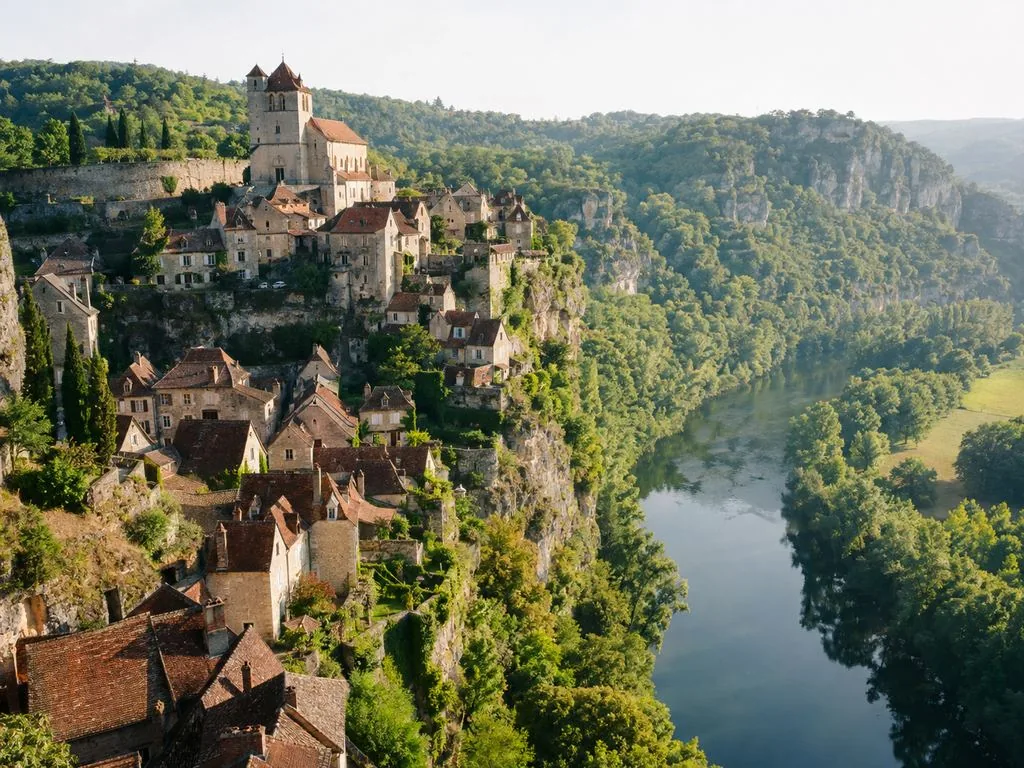
- Free time in Saint-Cirq-Lapopie to have lunch and explore the village
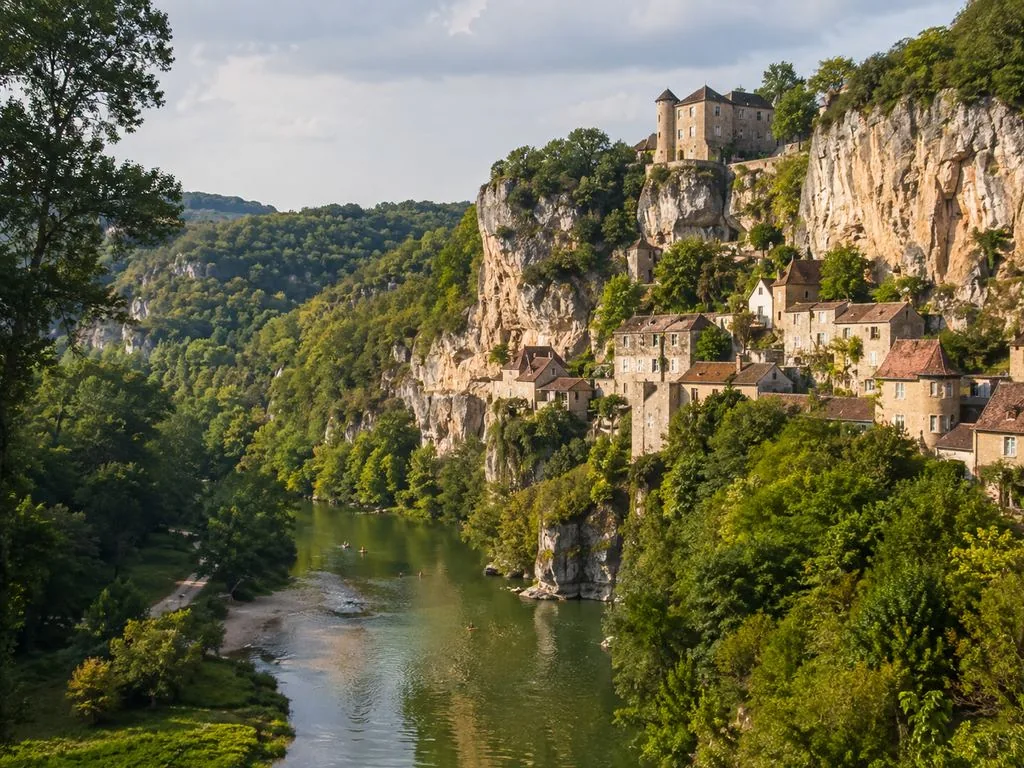
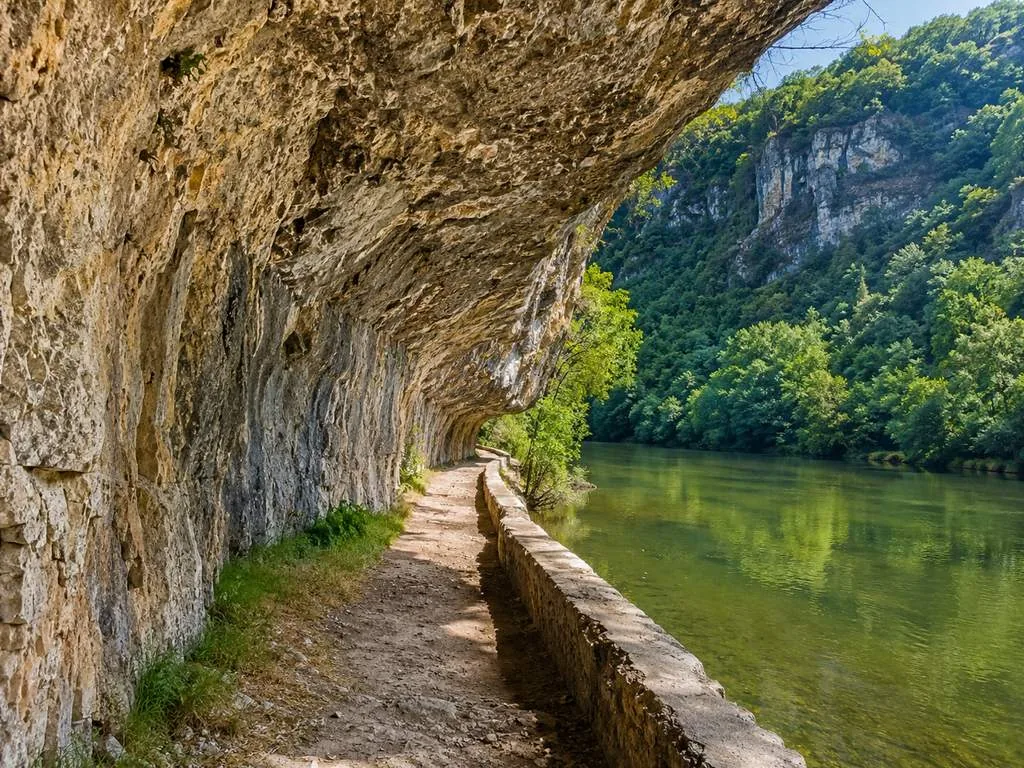
- The Bouziès towpath, carved into the cliff above the Lot
- The driver-guide’s commentary on the Lot Valley during the journey
Included in the ticket
- Admission to the cave, reserved for you
- Round-trip transport from downtown Cahors
- A local driver-guide, in French, English or Russian
- Free cancellation up to 24 hours before departure
- Not included: lunch, drinks, pick-up outside central Cahors
What you see in the cave, in order
The developed route is 1,200 m long and follows the same sequence. Here are the fourteen stops, as presented by the guide.
We descend via the staircase dug in 1923 near the prehistoric entrance, cross the Combel Gallery, the Black Frieze, and the flowstone chambers, and finish in front of the panel everyone is waiting for, the Spotted Horses.
- The entrance staircase — Dug in 1923, one year after the discovery, to avoid the narrow passage the teenagers crawled through.
- The Combel Gallery — Discovered in 1949 by André David. Bear claw marks in the clay, bear and hyena bones, and the oldest paintings: dots, horses, a feline, and deer.
- The Black Frieze — Seven metres of wall: a horse at the centre, four bison, eleven mammoths, four aurochs, drawn with manganese and iron oxide.
- The Corniche — Bison and mammoths in black outline, including one that uses the rock’s relief for its back.
- The Paintings Chamber — The large decorated chamber, where the guide takes time to explain the information panels.
- The Hieroglyphs Ceiling — Finger-drawn markings in the clay: mammoths, female figures, circles.
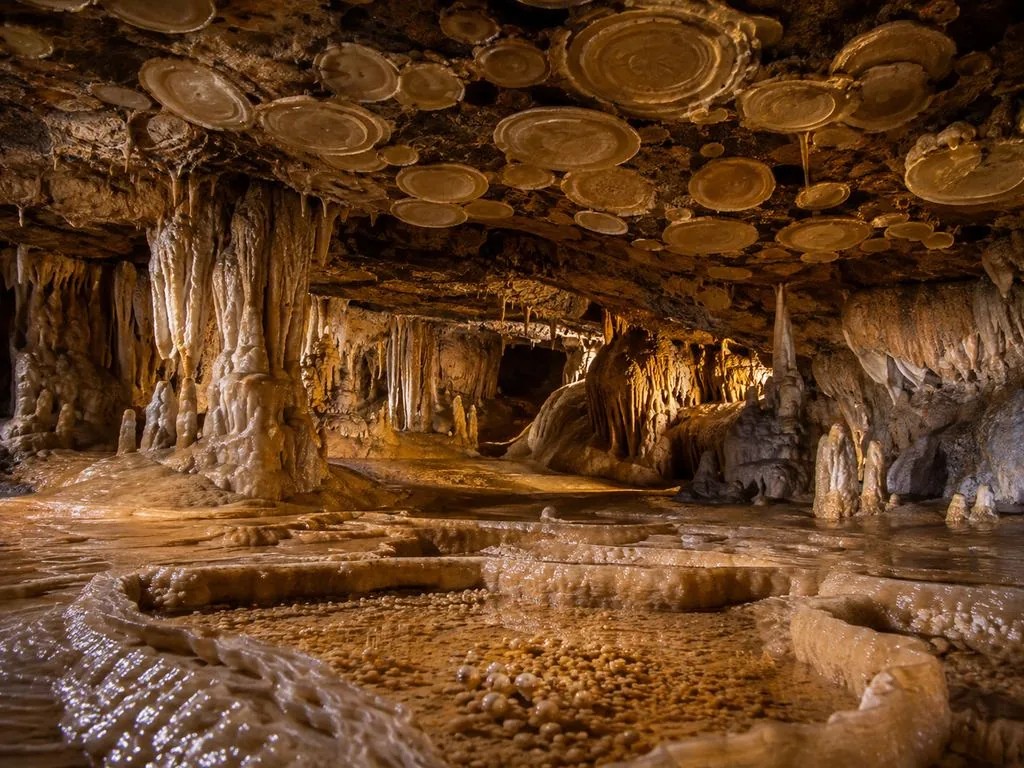
- The Disk Chamber — Naturally formed calcite disks, which Stéphanie mentions first in her review.
- The footprints — A dozen footprints of an adolescent, in both directions, preserved in the ancient clay.
- The Bear Gallery — Ancient columns, about fifty metres below the surface.
- The Bear Passage — A carved bear’s head, easy to miss without the guide.
- The Wounded Man — A red figure pierced by lines, interpreted since Lemozi’s time without consensus.
- The cavern’s pearls and the spinning top — Round concretions and a spinning-top shape I’ve never seen in any other cave.
- The Bison-Women — Red deer head, negative hand surrounded by thirteen dots, female figures, mammoths.
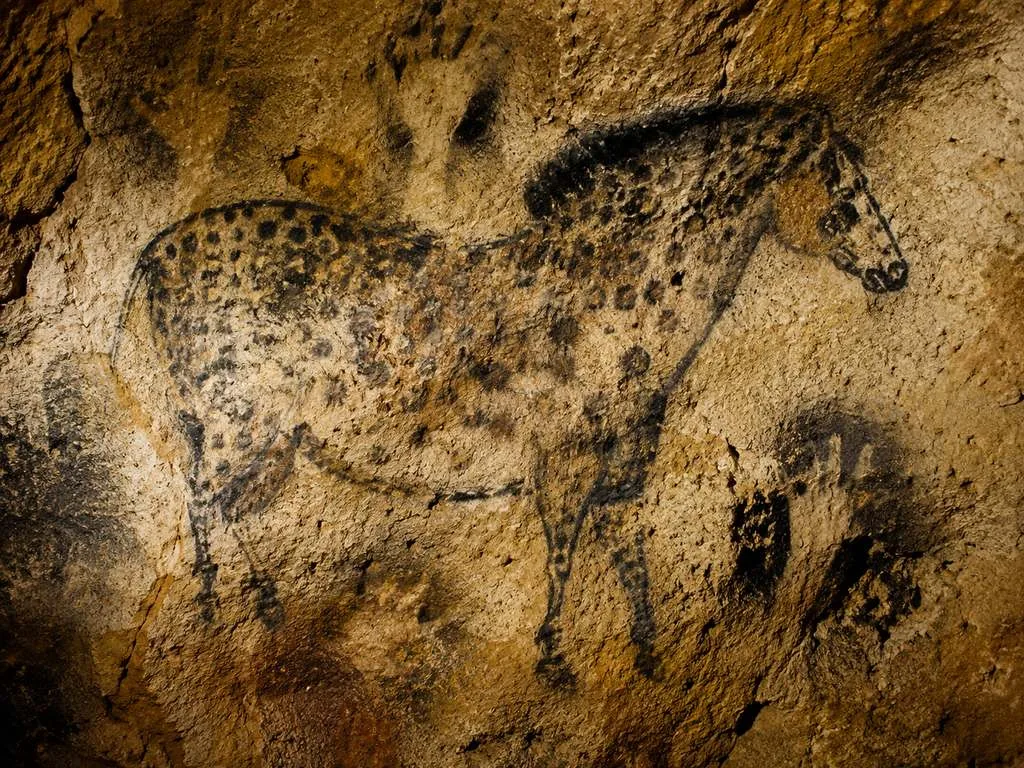
- The Spotted Horses — Two horses back-to-back, six black hand stencils, fish, and symbols. Dated to around 29,000 years ago.
The whole visit takes about an hour, at 54 °F, led by a guide from the Prehistory Centre. Details of each panel can be found on the what to see page; what sets Pech Merle apart from other caves is on the comparison of caves in France.
How does the booking work
Choose your option
Excursion with entry and transport included, or ticket only on the official booking site if you have a car.
Check the dates
The GetYourGuide calendar below shows the actually available departures from Cahors.
Book now
Instant confirmation, free cancellation up to 24 hours before. You don’t need to book anything else for the cave.
On the day
Meet in central Cahors in the morning, jacket in your bag, closed-toe shoes. The rest is taken care of.
Tour from Cahors, direct dates
Recent activity, no reviews published yet: I recommend it based on the itinerary, the local operator, and the cancellation policy, not on a rating.
Which excursion, depending on where you’re coming from?
Three different options. Only one of them does not enter the cave, and this is clearly stated.
| Rocamadour: small-group guided tour | Our pickFrom Cahors: Pech Merle Cave & Saint-Cirq-Lapopie | From Toulouse: Hidden medieval France & the Lot Valley | |
|---|---|---|---|
| Duration | 1 hr 30 | 8 hrs | 8 hrs |
| Departure | Rocamadour (Map, P2 car park) | Cahors city centre | Toulouse |
| Group | Small group | Small group | Private |
| Pech Merle Cave included | No | Yes, admission included | Yes, with a local guide |
| Languages | French | French, English, Russian | French, English |
| Cancellation | Free up to 24 hours in advance | Free up to 24 hours in advance | Free for 24 hours, pay later |
| Ideal for | A morning in Rocamadour | Staying in Cahors without a car | Families departing from Toulouse |
| See → | Book now → | See → |
Photo gallery
The cave and the valley in pictures
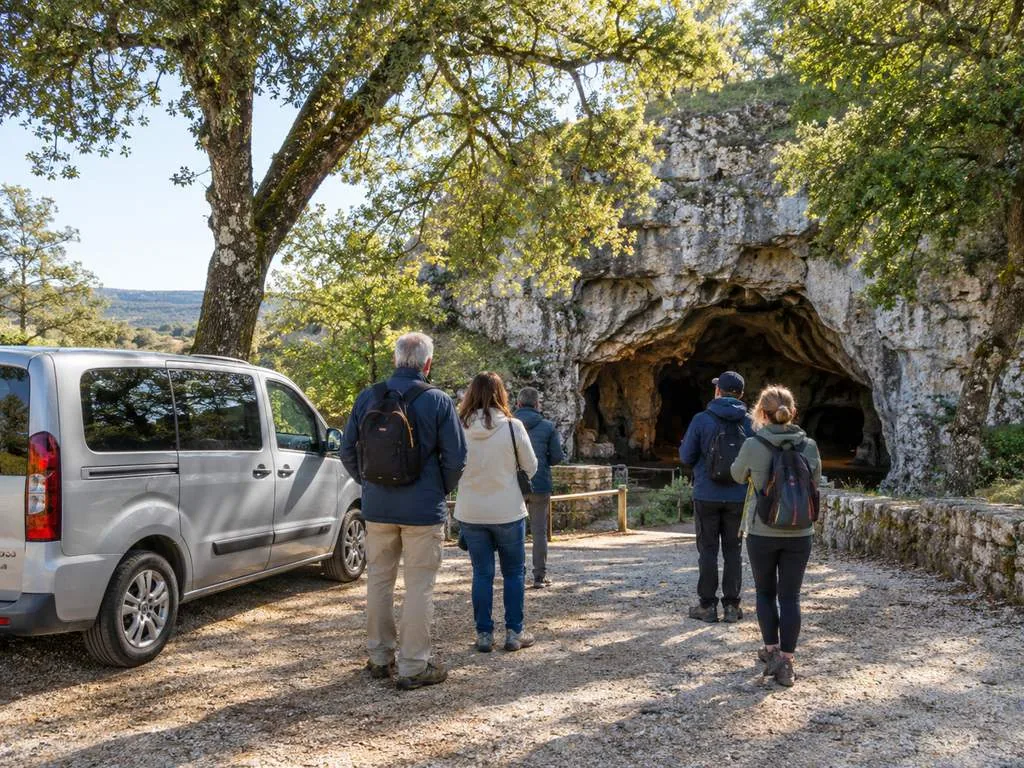
Photos are not allowed in the cave; the first image is an atmospheric reconstruction, not a photo taken on site.
Excursions that visit the cave, and the one that doesn’t
Two options include a visit to Pech Merle. The third, Rocamadour, is the highest-rated in the area but does not include the cave: I mention it here because many combine both during a stay.
 Our pick
From Cahors: Pech Merle Cave & Saint-Cirq-Lapopie
 Private
From Toulouse: Hidden medieval France & the Lot Valley
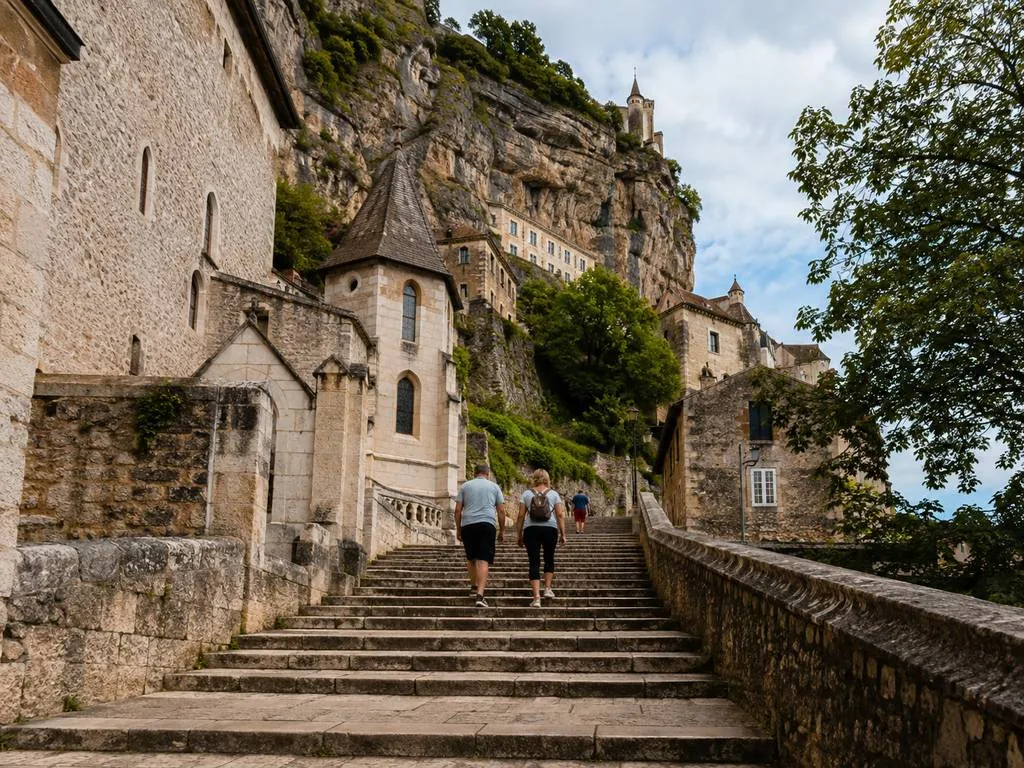 Top-rated
Rocamadour: small-group guided tour
What visitors say
The Cahors and Toulouse excursions are recent and do not yet have any reviews. The quotes below are about the cave itself (TripAdvisor, over 1,500 reviews) and the visit to Rocamadour.
Fascinating visit. Our guide, Thierry, was as friendly as he was captivating.
Lauriane, our guide, is passionate. We didn’t see the time go by.
Paintings and formations in the same cave. A must-book experience.
For geology enthusiasts: the discs, the pearls, and that spinning top found nowhere else.
Very friendly and knowledgeable guide.
Melissa was an excellent guide.
Reviews and ratings are those published directly on GetYourGuide. Read our detailed reviews ›
Four answers before booking
The questions I’m asked most often, answered in two sentences each.
Excursion or ticket only?
With a car, just the ticket from the official booking site is enough, provided you book in advance. Without a car, the excursion from Cahors includes entry and transport, and you don’t need to organise anything else.
How much time should you allow?
One hour in the cave, then the film and the Amédée Lemozi museum: two to two and a half hours on site. Details are on the duration page.
Can I bring children?
Yes, from around the age of three, preferably in a baby carrier rather than a stroller for the youngest. Prehistory is part of the Year 4 curriculum, which helps: see visiting with children.
What to do around the cave?
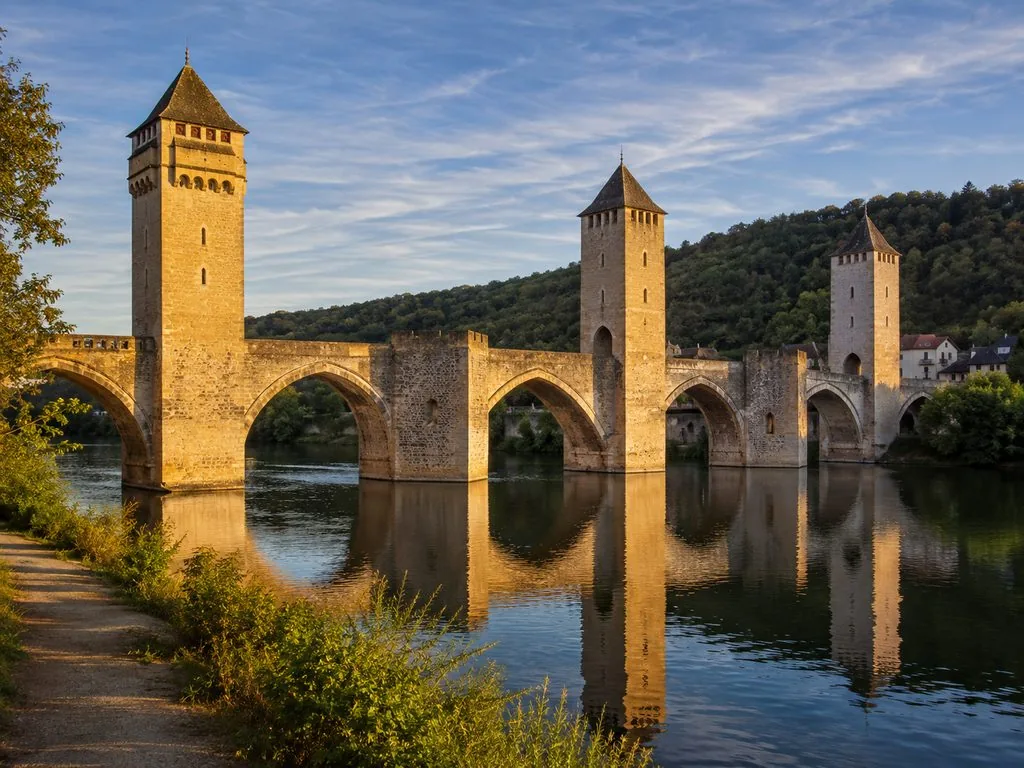
Saint-Cirq-Lapopie is a fifteen-minute drive away, the Bouziès towpath, Cahors and its Valentré Bridge, and Rocamadour an hour away. I’ve detailed all of this on the Lot Valley page.
These dates don’t work for you?
Explore other available tours in the Lot and find the one that fits your schedule — instant confirmation and free cancellation on most of them.
The Pech Merle cave, explained
I’ve visited Pech Merle about fifteen times, the first in fourth grade with my school from Cabrerets. I’m always asked the same questions: is it a real cave, do you need to book, how do you get there without a car? Here are the answers, in the order they come up.
What it is, and why it’s rare
Pech Merle is a Paleolithic decorated cave, on the causse above the Célé valley, in Cabrerets. The painted galleries were discovered in 1922 by three teenagers from the village, André David, Henri Dutertre and Marthe David, whom Abbé Amédée Lemozi, the parish priest of Cabrerets, had encouraged to search. The cave opened to the public in 1926, was classified as a historic monument in 1952, and Abbé Breuil called it the Sistine Chapel of Quercy. Michel Lorblanchet wrote the definitive study on it.
What sets it apart is that you see the original paintings. Lascaux has been closed since 1963, and you visit a replica there; the same goes for Chauvet. Here, along a 1,200-metre route, the inventory includes around 700 motifs, with 70 animals, 28 human figures and hands, and some 550 dots, painted between 29,000 and 16,000 years ago. The panel of the spotted horses—two horses back-to-back surrounded by dots and negative handprints—has been radiocarbon-dated to about 29,000 years ago. The cave also features the concretions you’d seek elsewhere: calcite discs, cave pearls, and the ‘top’. I’ve included a comparison with Lascaux, Niaux, Font-de-Gaume, and Cougnac on the page of the most beautiful caves in France.
What to expect during the visit
The visit is guided, mandatory, and led by a guide from the Prehistory Centre, in French, English, or Spanish depending on the time slot. It lasts about one hour, in groups of up to 25 people. The ticket also grants access to the introductory film and the Amédée Lemozi museum, which covers 350,000 years of human occupation in Quercy, from Neanderthals to the Gauls. Watch the film before entering, even if it’s dated—you’ll better understand the black frieze and the teenager’s footprint when you know what to look for.
The temperature remains a constant 12 °C year-round, with high humidity, stairs, and occasionally wet floors. A jacket and closed-toe shoes are sufficient. Photos and videos are prohibited, which simplifies things: you can leave your camera and bag in the car. The cave is not wheelchair-accessible, and the Centre advises against visits for children under three and those with claustrophobia. The full itinerary, including the film and museum time, is available on the visit duration page.
Book now: the 700-person quota
To protect the paintings, access is capped at 700 visitors per day. In summer and during school holidays, time slots sell out several days in advance, sometimes more. Booking before you come is therefore not just a guide’s advice—it’s the condition for entry. Two ways to do it: the ticket alone on the official ticket office of the Prehistory Centre (not by email) if you have a car; or an excursion that includes entry, in which case the operator books the time slot for you. Opening times vary by season, and the cave closes from November to February—check pechmerle.com. Details, including discounts for children and Heritage Days, are on the booking and tickets page.
Getting here without a car
The nearest train station is Cahors, 40 km away, and the nearest airport is Toulouse-Blagnac, 145 km away. No bus goes up to the cave. From Cahors, allow three-quarters of an hour by road via the Lot Valley and then the Célé Valley, by car, taxi or organised excursion. That’s where the excursion from Cahors makes sense: departure from the city centre in the morning, cave admission included, local driver-guide, return in the evening, free cancellation up to 24 hours before. From Toulouse, the private version does the same, adding a visit to Cahors and the Valentré Bridge. From Sarlat, be aware: the Rocamadour and Saint-Cirq-Lapopie excursion does not include the cave.
Combine with Saint-Cirq-Lapopie
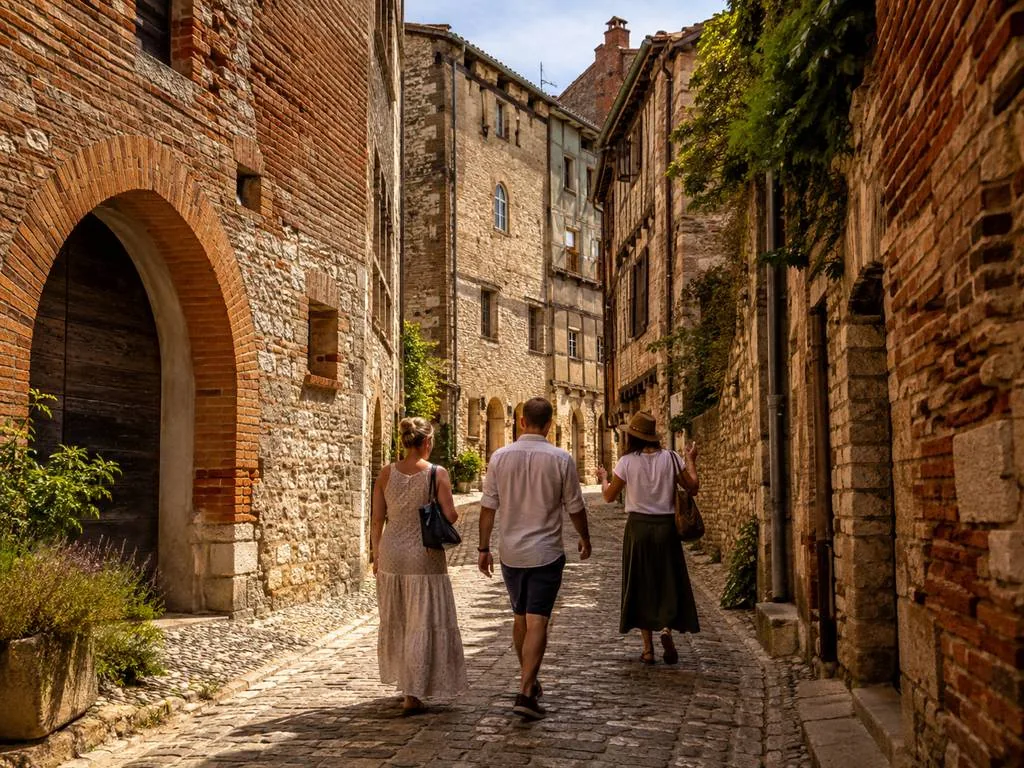
Saint-Cirq-Lapopie is a fifteen-minute drive from Cabrerets, perched above the Lot River, with its 13th- to 16th-century houses and the home where André Breton once lived. Visiting the cave in the morning, when groups are quieter, then the village for lunch and a stroll—that’s the order I recommend to everyone, and the one this excursion follows. It also stops at the towpath in Bouziès, carved into the cliffside along the Lot. With two days, you can add Cahors, Rocamadour (an hour away), and enjoy black truffles or Malbec; I’ve detailed this itinerary on the Lot Valley page.
What disappoints
A few points, so you don’t discover them on the spot. The introductory film is dated. The visit is short—one hour—for the distance traveled from Cahors or Toulouse; the museum and village make up for it, provided you allow them time. Saint-Cirq-Lapopie on a summer afternoon is packed, and lunch isn’t included in the excursion. The bookshop is expensive, even if it’s the only place to buy an image of the paintings. Finally, the Cahors and Toulouse excursions are recent and have no published reviews: I assess them based on the itinerary, the local operator, and the cancellation policy, and I explain this on each review page. What never disappoints are the guides. With over 1,500 TripAdvisor reviews, the cave has a 4.6 out of 5 rating, and the names Thierry, Lauriane, and Gilles recur in the summer 2026 comments.
Frequently asked questions
What makes the Pech Merle cave special?
You’ll see original paintings, not a replica: around 700 motifs, including 70 animals, along a 1,200 m route, in a cave that also features formations, discs, pearls and the top. The spotted horses, dated to around 29,000 years ago, and the footprint of an adolescent are the two things visitors remember most. The step-by-step details are on the what to see page.
How long does the Pech Merle cave visit last?
The guided tour lasts about one hour, between 50 minutes and an hour depending on the group. Including the introductory film and the Amédée Lemozi museum, allow two to two and a half hours on site, and half a day including travel from Cahors. I’ve detailed the scenarios on the visit duration page.
Who discovered the Pech Merle cave?
Three teenagers from Cabrerets, in 1922: André David, 16, Henri Dutertre, 15, and Marthe David, 13, encouraged by Abbé Amédée Lemozi, the village priest and amateur prehistorian. The cave opened to the public in 1926 and was classified as a historic monument in 1952. The rest is on the history and discovery page.
What are the three most beautiful caves in France?
It depends on what you’re looking for. For original paintings, Pech Merle, Niaux, and Font-de-Gaume; for replicas of cave art, Lascaux IV and Chauvet 2; for concretions or underground rivers, Padirac, Aven d’Orgnac, or Aven Armand. I compare all of these, without any invented ranking, on the page of the most beautiful caves in France.
What to wear for the cave visit?
A jacket or sweater, closed-toe non-slip shoes, nothing more. It’s 12°C with high humidity, the floor is sometimes wet, and there are stairs. My full list is on the what to wear page.
Is it cold inside Pech Merle cave?
It stays at 12°C all year round, which feels cold in the middle of summer and almost mild in February. An hour is enough to feel cold in a T-shirt. More details on the cave’s temperature page.
Can you take photos inside the cave?
No, neither photos nor videos are allowed to protect the pigments from light and keep the flow of groups smooth. The gift shop and the official site’s virtual tour provide alternatives. I explain why on the no photos allowed page.
What does the name Pech Merle mean?
“Pech” means hill or height in Occitan. The origin of “Merle” is debated—it may derive from “major,” meaning the big hill. I don’t take sides, and I explain why on the meaning of Pech Merle page.
Another question? Write to us: [email protected]